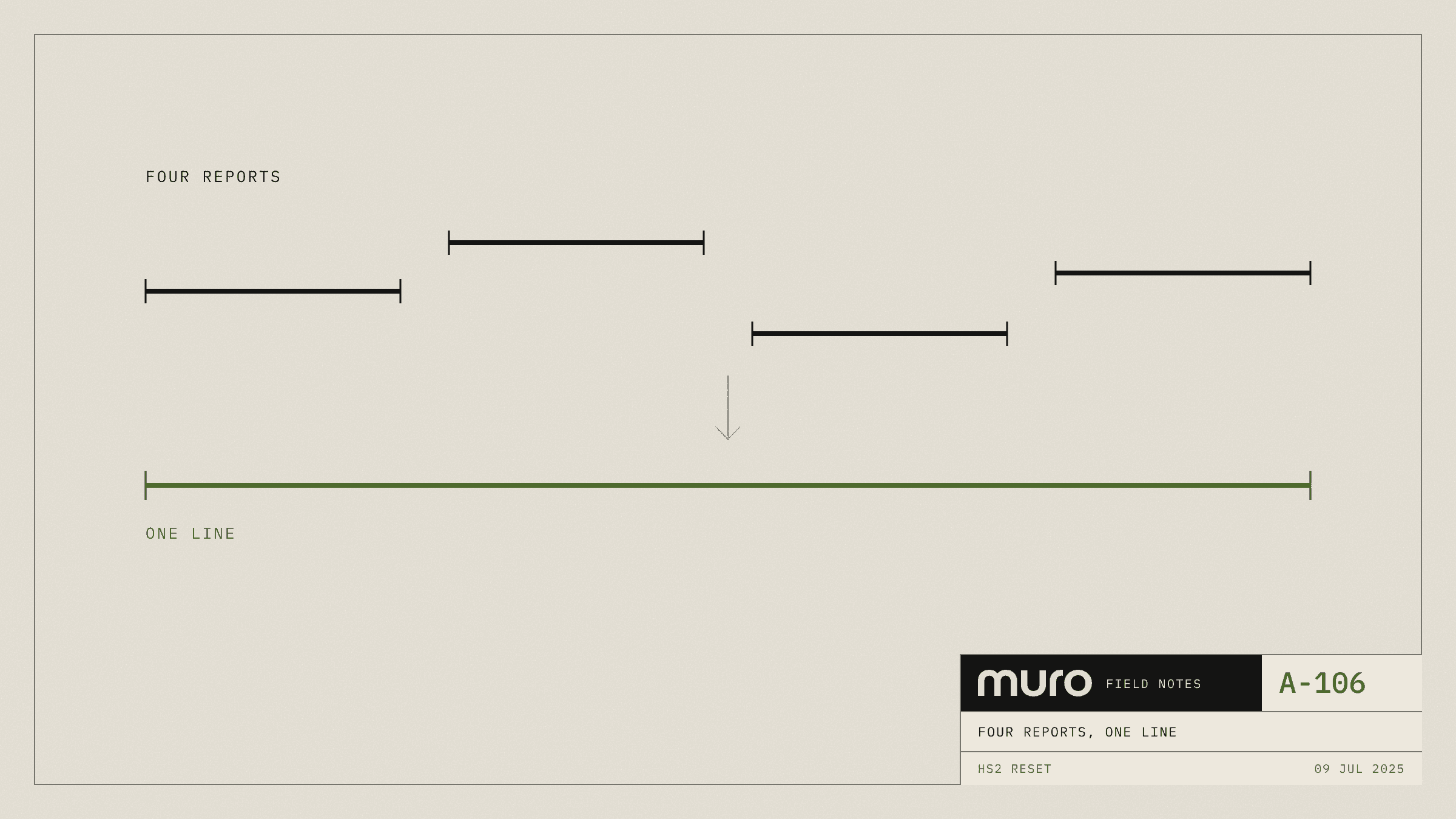
At the heart of the critiques is a single, familiar root-cause: data living in separate pockets — cost logs here, schedule data there, risk registers in someone else’s spreadsheet — with no single source of truth. For contractors and owners alike, integrated pre-construction data isn’t a tech upgrade — it’s risk insurance.
Why pre-construction can’t afford siloed data
Pre-construction is where scope, cost and risk are frozen (or should be). When information is scattered:
-
Bids stall while estimators hunt for the latest quantities or historic unit-rates.
-
Errors multiply as scope gaps or duplicate allowances slip through.
-
Strategic decisions blur because no-one trusts “the number” long enough to act on it.
HS2 is a megaproject-scale example, but the pattern is universal. A global Autodesk + FMI study found that bad or incomplete construction data wiped out $1.8 trillion in productivity in 2020 alone and drove 14 % of all avoidable rework.
Conversely, firms that get data right in the front-end reap outsized returns. FMI’s State of Global Preconstruction report shows organisations with mature, connected pre-con workflows are 52 % more likely to be profitable and report 40 % higher client satisfaction — yet fewer than one-in-five contractors operate at that level.
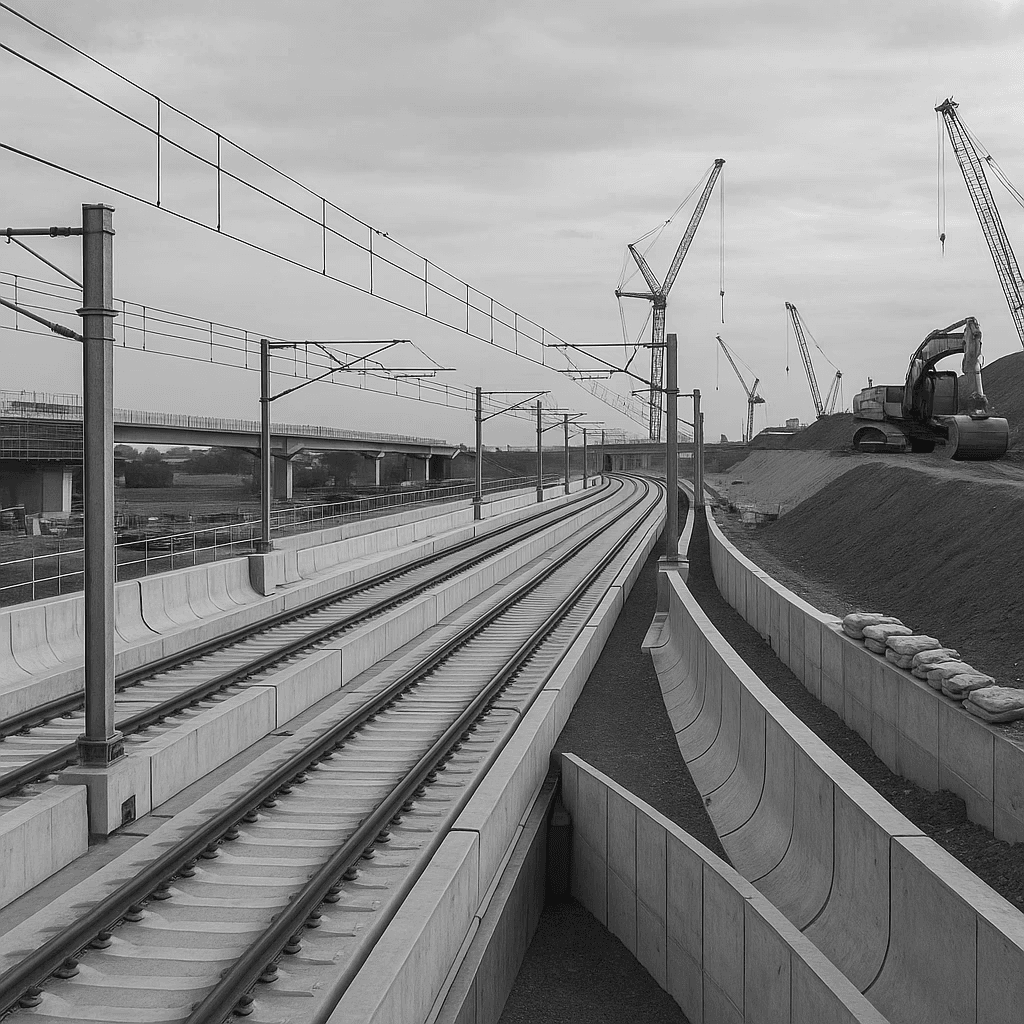
Inside the HS2 failure: a cautionary timeline
| Symptom | What went wrong | Underlying data issue |
|---|---|---|
| Cost forecasts spiralled from $45 Bn (2012) to $109 Bn+ (2024) | No unified cost-tracking across 350+ work packages; each JV used its own template | Fragmented cost databases, no live roll-up |
| Programme reset announced (Jun 2025) | New CEO says “overall situation on cost, schedule and scope is unsustainable” | Schedules stored in vendor-specific P6 files, not linked to evolving design data |
| PAC: “HS2 Ltd & DfT cannot agree the numbers” (Feb 2025) | Owner team and delivery company run separate risk & contingency models | Multiple “truths” for risk exposure; decisions made on stale snapshots |
(Sources: UK PAC report, Hansard statement, Guardian coverage)
What integrated data looks like in pre-construction
Imagine the opposite of the HS2 story:
-
One cloud database for quantities, rates, and mark-ups — every change time-stamped and permission-controlled.
-
Live links between the estimate and the CPM schedule, so shifting a work package automatically updates prelims and cash-flow.
-
Scope libraries (spec sections, boiler-plate, alternates) served via search — not someone’s inbox.
-
Historical cost & performance tagged to CSI/UniFormat codes and surfaced by AI so the next bid starts at 80 % complete, not zero.
-
Structured stakeholder input captured through form-based RFIs and design decision logs, eliminating “lost” emails.
DPR Construction’s recent roll-out of an AI platform that merges estimating spreadsheets, ERP data, Primavera schedules and Procore files into a single dashboard is a live, positive example of what this looks like in practice.
A playbook for breaking silos before day 1
-
Map the data flow — list every dataset touched between pursuit and GMP sign-off; flag duplicate entry points.
-
Choose a primary system of record (your “common data environment”) and integrate, don’t clone, feeder systems.
-
Standardise coding (cost codes, WBS, location breakdown) so disparate apps speak the same language.
-
Automate validation — run nightly checks for missing cost codes, orphaned quantities, version mismatches.
-
Surface insights early — push dashboards on contingency burn, design maturity and cost per key measure to execs weekly.
Why does it matter?
HS2 shows, in billion-dollar neon, what happens when a project is “too big to fail” yet runs on disconnected spreadsheets: delays, distrust, and eventually a public-sector apology in the House of Commons.
For contractors and owners alike, integrated pre-construction data isn’t a tech upgrade — it’s risk insurance. The earlier you unify scope, cost and schedule into a single, trusted dataset, the faster you bid, the fewer surprises you inherit, and the stronger your margin protection when the shovels hit the ground.